Palm Bay's Hispanic community, 1980s to now
Palm Bay was nearly 90% non-Hispanic white in 1980. By 2020 Hispanic residents made up approximately 20% of the city's population. The shift tracks broader Florida demographics and includes substantial Puerto Rican migration, particularly after Hurricane Maria in 2017.
In the 1980 census, Palm Bay was approximately 88% non-Hispanic white and approximately 5% Hispanic. By the 2020 census, those numbers were approximately 60% non-Hispanic white and approximately 20% Hispanic. That’s a transformation of the city’s demographic composition across forty years, and it shows no signs of stopping.
The shift in Palm Bay tracks broader Florida and broader U.S. demographic trends. Florida’s Hispanic population grew from roughly 9% statewide in 1980 to roughly 27% in 2020. Palm Bay’s increase is in line with that statewide pattern.
The early Hispanic presence
The 1980 census Hispanic figure of approximately 5% in Palm Bay translated to a few hundred residents, distributed across the city without concentrated geographic clustering. The early Hispanic residents were a mix of long-resident Cuban Americans (part of the broader post-1959 Cuban immigration that had settled in Miami and dispersed through Florida), Puerto Ricans (American citizens with established mainland communities since the 1950s), Mexican Americans, and a smaller share of South American immigrants.
In 1980 Palm Bay terms, the Hispanic community was a recognized but small minority within a predominantly Anglo city. There were no Spanish-language institutions, no concentrated commercial corridors, and limited bilingual public services. Hispanic residents in Palm Bay in 1980 were typically integrated into mainstream institutions, with the cultural visibility one would expect from a 5% share.
The 1990s and 2000s buildup
The 1990 census Hispanic figure for Palm Bay was approximately 7%. By 2000 it was approximately 9%. By 2010 it was approximately 14%. The growth was steady, not explosive, through this period. The drivers included:
In-migration to Florida from Hispanic-origin populations elsewhere in the U.S., particularly from the Northeast Puerto Rican diaspora and from California-area Mexican American communities.
In-migration directly from Latin American countries, including Cuba (continuing the post-1959 pattern), Mexico, Colombia, Venezuela, and various Caribbean and South American nations.
Natural increase from the established Hispanic community, with younger demographic profiles producing higher fertility rates than the older non-Hispanic white population.
Internal Florida migration, with Hispanic households moving from the Miami metro area to lower-cost Florida cities including Palm Bay.
The Maria-era surge
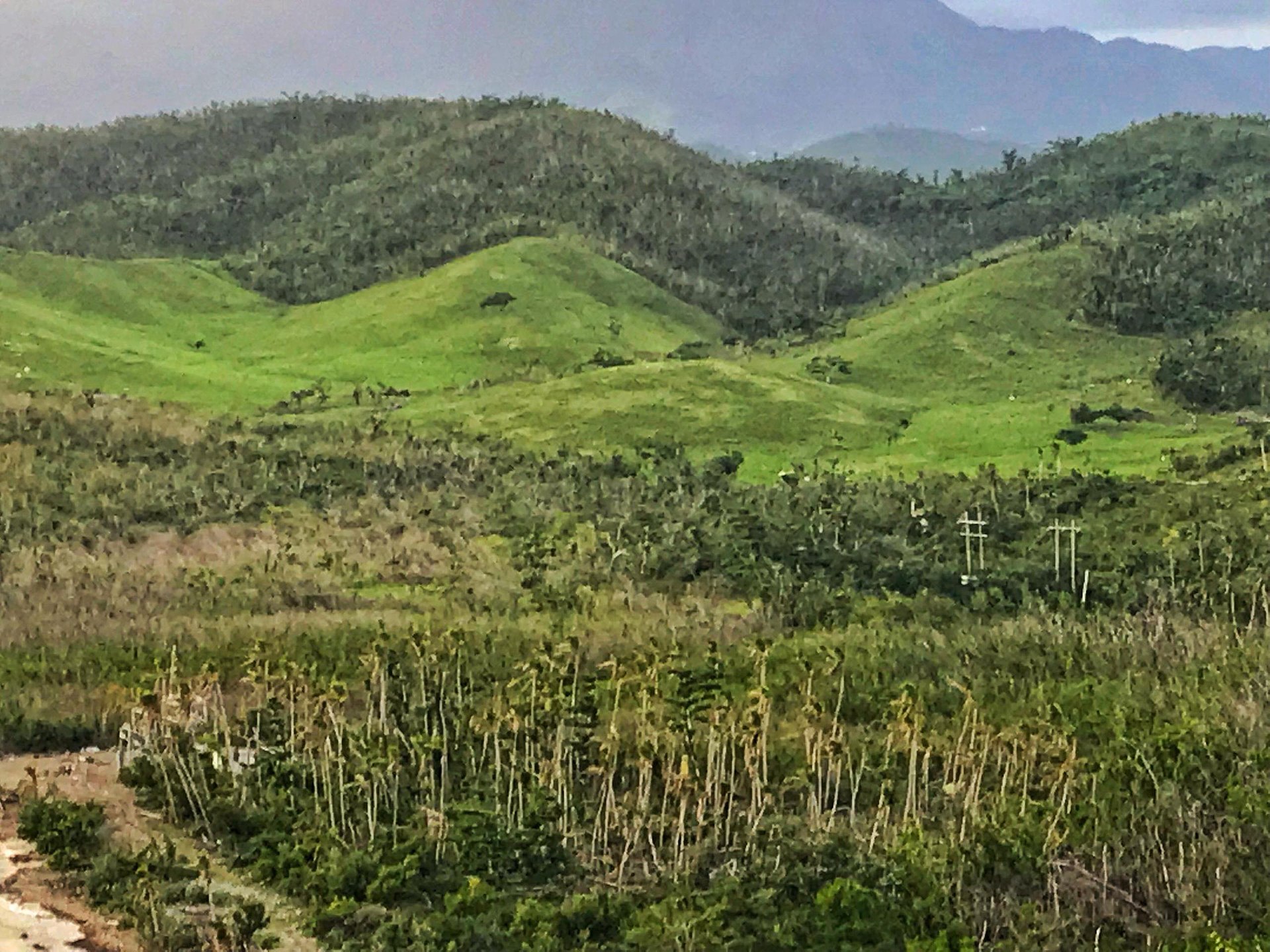
Hurricane Maria struck Puerto Rico on September 20, 2017, as a Category 4 storm. The damage was catastrophic. Power was out across the island for months. Many Puerto Rican residents, U.S. citizens with mainland family networks and the legal ability to relocate immediately, left the island for mainland destinations. Florida received a disproportionate share of the post-Maria diaspora.
Estimates of post-Maria Puerto Rican migration to Florida vary, but the consensus range is that Florida received somewhere between 50,000 and 150,000 Puerto Rican residents in 2017-2018, with the higher estimates including subsequent secondary migration. Orlando received the largest share. Tampa received a substantial share. Brevard County, including Palm Bay, received a smaller but meaningful share of the migration.
The Palm Bay Puerto Rican population increased measurably between 2017 and the 2020 census. The 2020 American Community Survey 5-year estimates and the 2020 decennial census both show the city’s Hispanic share above 17%, with Puerto Rican origin a substantial component.
The geographic distribution
Palm Bay’s Hispanic population is dispersed across the city, with no single neighborhood that functions as a Hispanic enclave in the way that some Miami or Orlando neighborhoods do. The dispersal reflects Palm Bay’s overall residential pattern: the GDC-platted subdivisions are mostly fungible from a real estate standpoint, and households of any background settle into whatever neighborhood matches their budget and family needs rather than concentrating by ethnicity.
There are observable concentrations. Some neighborhoods in southwest Palm Bay have higher Hispanic shares than the city average. Some neighborhoods in the older eastern Palm Bay east of U.S. 1 have similar or higher concentrations. But the variation is modest; even the most Hispanic-concentrated Palm Bay neighborhoods are typically 25-30% Hispanic, not 60% or 70% as in some Miami neighborhoods.
This pattern, broadly dispersed rather than concentrated, is more typical of recent Hispanic settlement in newer Florida suburbs than of the older urban Hispanic communities. It reflects both the integrative trajectory of the post-1990s migrant cohort and the structural fact that Palm Bay doesn’t have older urban neighborhoods of the type that historically supported high-concentration ethnic enclaves.
Commercial and institutional development
Palm Bay’s Hispanic-oriented commercial and institutional landscape has grown alongside the population. Spanish-language radio is available regionally. Various Spanish-language print and online media serve the area. Restaurants and grocery stores oriented toward Hispanic customers operate in multiple parts of the city.
Religious institutions have adapted. Several Palm Bay-area Catholic parishes offer Spanish-language Masses. Some Protestant churches operate Spanish-language services or have established Spanish-language congregations. Pentecostal and evangelical Hispanic congregations have grown.
Bilingual public services have expanded gradually. The city government, school district, and county services all offer Spanish-language materials and bilingual staffing at expanding scales. The pace lags the demographic shift, as is generally true across Florida, but the trajectory is consistent.
The economic and educational profile
Palm Bay’s Hispanic population, by census data, includes the full range of economic and educational profiles found in any large Florida Hispanic community. Some Palm Bay Hispanic residents are highly educated, in professional occupations, and at upper-middle-class income levels. Many are in working-class occupations with median household incomes. Some are recent immigrants in entry-level service work.
The Puerto Rican subset, given its automatic U.S. citizenship and English-language capacity in many cases, has been more rapidly integrated into the Palm Bay labor market than some non-citizen immigrant groups elsewhere. The 2017-2018 Maria-era arrivals included substantial professional and skilled-worker representation alongside other categories.
The intergenerational pattern
Palm Bay’s Hispanic community now includes multi-generational households, second- and third-generation U.S.-born Hispanic Americans in addition to first-generation immigrants. The intergenerational pattern shows the standard U.S. trajectory: declining Spanish-language usage by generation, increasing intermarriage with non-Hispanic populations, increasing educational attainment, and gradual blurring of ethnic identity boundaries.
This is the same trajectory observed in Hispanic communities across the U.S. Palm Bay’s situation is not distinct from broader Florida and national patterns; it’s a local instance of those patterns.
What the trajectory points toward
If current trends continue, Palm Bay’s Hispanic share will likely reach approximately 25% by 2030 and could exceed 30% by 2040. The non-Hispanic white share will continue to decline as a proportion of total population, though absolute numbers may remain stable. Black and Asian shares will continue their own trajectories. Multi-racial and multi-ethnic identification will increase.
These projections assume continuation of current migration and demographic trends. They could be disrupted by major changes in U.S. immigration policy, by climate and hurricane risk affecting Florida migration generally, by economic shifts changing Florida’s relative attractiveness, or by other factors. The structural trend has been steady for four decades; the assumption of continuation is the base case.
Why this matters
Palm Bay’s demographic composition is not unique. Many fast-growing Florida cities have similar trajectories. What makes Palm Bay’s case interesting historically is the starting point: a 1980 Palm Bay was nearly 90% non-Hispanic white because the city’s earlier history (Tillman, the 1920s rebranding, the GDC sales to predominantly white northern buyers) had produced an almost entirely Anglo population by the late 20th century.
The post-1980 demographic shift has been driven entirely by in-migration and natural increase from non-Anglo populations. Palm Bay has been transformed demographically without large-scale displacement of existing residents, which is a different pattern than the urban-gentrification displacement common in older U.S. cities. The pre-1980 Palm Bay residents are still in Palm Bay; new residents have just added to the population and shifted the composition.
This is, structurally, what suburban demographic change looks like in the 21st-century U.S. South. The change is real, the change is sustained, and the change happens through expansion rather than replacement. Palm Bay is one local instance of a much broader pattern, and its Hispanic community is part of that broader American demographic story.
Further Reading
As an Amazon Associate we earn from qualifying purchases.